Why do so many asset management transformation programs begin with strong executive support, clear strategic goals and significant investment - yet struggle to deliver meaningful operational change?
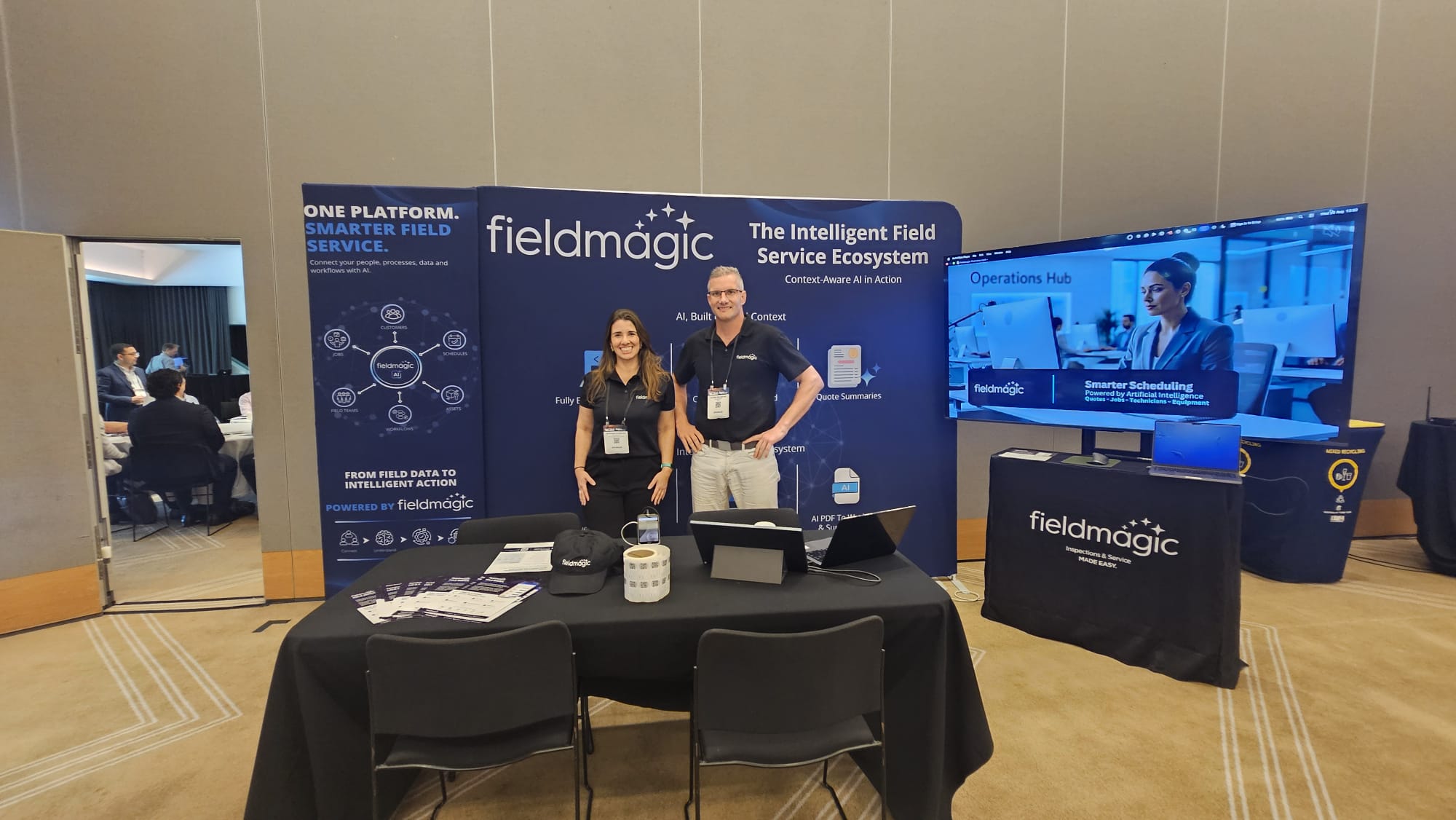
This question was at the centre of a panel discussion chaired by Anthony Coles at FSM 2026. The discussion explored the persistent gap between asset management strategy and frontline execution, revealing that transformation rarely fails because an organisation lacks ambition or technology. More often, it fails because alignment, communication and operational discipline break down during delivery.
For field service and asset-intensive organisations, the lesson is clear: strategy only creates value when it changes what happens on the ground.
Transformation is an organisational challenge
A successful transformation cannot be owned by one executive, department or project team.
Asset management connects operations, field technicians, finance, customer service, compliance teams and senior management. If these groups are working toward different objectives - or interpreting the transformation differently - the initiative will quickly lose momentum.
Vertical alignment ensures leadership, management and frontline teams understand the same objectives. Horizontal alignment ensures departments work together rather than optimising their own isolated processes.
This requires more than a project announcement. Every group needs to understand:
- Why the organisation is changing
- What success looks like
- How their work will be affected
- What information they are responsible for
- How the new processes will improve outcomes for employees and customers
Without that shared understanding, even a well-designed strategy can become fragmented during implementation.
Avoiding the “70% completion” trap
One of the most important observations from the panel was the tendency for transformation programs to stall at around 70% completion.
At this point, the system may have been deployed, initial training completed and core processes introduced. The project can appear largely finished. However, the final 30% is often where much of the value is created.
This final stage includes embedding consistent processes, resolving adoption issues, improving data quality, refining reports and ensuring every team is using the system as intended.
Unfortunately, organisational priorities can shift. Project ownership may change. Key people move into other roles, and the transformation is declared complete before the new operating model has genuinely become part of everyday work.
Technology going live is not the finish line. The real measure of success is whether the organisation consistently works differently - and achieves better results because of it.
Build a framework that can evolve
Transformation programs also struggle when the original strategy is treated as fixed.
Organisations need a clear direction, but they also need enough flexibility to respond to what they learn during implementation. Processes that looked sensible during planning may need to change once technicians begin using them in the field.
This does not mean abandoning the original strategy whenever a challenge arises. It means establishing a stable framework while allowing workflows, forms, reports and operating procedures to improve over time. A malleable approach supports continuous improvement without losing sight of the organisation's broader objectives.
This is particularly important for businesses managing different asset types, customer agreements and compliance requirements. Core asset categories and data standards can be consistent across the organisation, while inspection procedures, service levels and reporting requirements remain specific to each contract.
A school, hospital, commercial building and correctional facility may all require structured asset management, but their operational context is very different. Effective systems need to support both standardisation and flexibility.
Technology must serve the people using it
The panel also reinforced an important principle: technology should enable transformation, not dictate it.
A technically capable system can still fail if it does not reflect how work is actually performed. When frontline users are consulted too late, organisations risk introducing processes that create additional administration, duplicate effort or make field work harder.
The better approach is to involve representatives from across the organisation early - technicians, schedulers, asset managers, finance, customer service, compliance teams and management. A cross-functional working group can help define:
- The information technicians need in the field
- The data that must be captured during each visit
- How defects should be reported and resolved
- What information finance requires for billing
- What customers need to see in reports and portals
- Which performance indicators management needs to track
This process does more than improve the system design. It creates internal advocates who understand the purpose of the transformation and can help other employees adopt it.
Data only creates value when it drives action
Most asset-intensive organisations already have large volumes of data. The challenge is turning that information into practical decisions.
Asset registers, job histories, inspection results, defect records, technician notes and service reports are valuable only when they are accurate, accessible and connected.
Organisations should avoid waiting for perfect data before making progress. Available information can often support a useful decision, even if further improvement is required. The goal should be to establish a cycle in which operational activity improves the data, and better data improves future decisions.
For example, consistent field data can help an organisation:
- Identify recurring asset failures
- Prioritise defects based on risk
- Improve preventative maintenance schedules
- Track compliance more effectively
- Understand the true cost of maintaining an asset
- Measure technician and contract performance
- Provide customers with clearer evidence of completed work
This is where an integrated field service and asset management platform can turn information captured during everyday operations into meaningful business intelligence.
How Fieldmagic helps turn strategy into execution
Fieldmagic helps organisations connect their asset management strategy with the work being completed in the field. Rather than separating asset information, scheduling, inspections, defect management and reporting across disconnected systems, Fieldmagic brings these processes together in one operational environment.
- Create a structured and searchable asset register
- Configure asset categories and fields around their operating model
- Standardise core processes while supporting contract-specific requirements
- Build custom inspection forms and field workflows
- Schedule planned, reactive and recurring maintenance
- Give technicians full mobile access, including while offline
- Capture inspection results, photos, notes and defects against individual assets
- Resolve defects and record supporting evidence in the same field workflow
- Maintain a complete service and compliance history
- Automate reports and customer communications
- Provide customers with controlled access through a dedicated portal
- Connect operational information with other business systems through APIs, workflows and webhooks
- Monitor progress through dashboards, milestones and operational reporting
Fieldmagic Studio also allows organisations to adapt forms, fields, layouts and workflows as requirements evolve. This supports the malleable approach discussed at FSM 2026: establish a consistent operating framework, learn from the people using it and continuously improve without rebuilding the entire system.
A practical path to successful transformation
The panel discussion highlighted four essential stages for closing the gap between strategy and execution.
- Preparation. Establish a common language for assets, jobs, inspections, defects and service outcomes. Define ownership, processes and measures of success before implementation begins.
- Engagement. Create a cross-functional working group with genuine frontline representation. Use its input to design processes that work across operations, finance, customer service and the field.
- Execution. Break the transformation into measurable stages, assign clear ownership and maintain focus beyond the initial system launch. Continue until the agreed processes are fully embedded.
- Review. Monitor adoption, data quality and operational results at each milestone. If warning signs emerge, investigate them early and be prepared to revise the approach.
From strategic intent to everyday action
The strongest message from FSM 2026 was that transformation is not achieved by strategy or technology alone. It happens when leadership provides direction, departments align around common objectives, frontline teams understand the reason for change and the organisation maintains the discipline to complete what it started.
Technology plays an essential role - but only when it connects people, processes, assets and information in a way that supports everyday work. Fieldmagic provides the operational foundation for that connection, translating asset management objectives into scheduled work, consistent inspections, accountable defect resolution, reliable data and measurable outcomes.
Because the real value of an asset management strategy is not found in the plan. It is found in what gets delivered.